
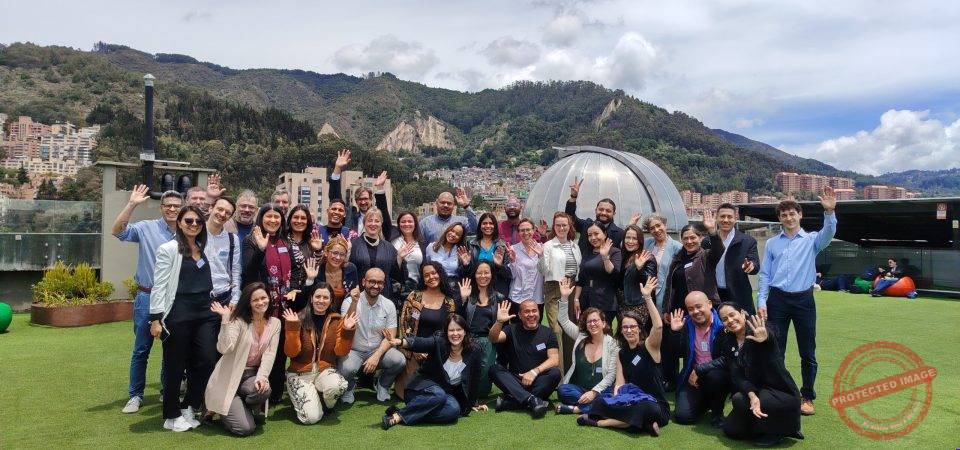
Nine years is a long time between meetings! The last time child helplines from across the Americas and the Caribbean sat in the same room together was in Costa Rica in 2017. But, from 22 to 24 September, 38 current and potential members and partners met once again, this time hosted by Red PaPaz and Línea 106 in Bogotá, Colombia.
Our members have been meeting with each other since 2003, sometimes for International Consultations that involve the entire membership from all over the world, sometimes for Regional Consultations. Each time, the room and the context around us change – but the reason we meet does not: children and young people are reaching out for help every day, and the child helplines answering them are stronger when they learn from one another. The agenda for this meeting was built together with our members in the region. Here’s what stayed with us:
What children and young people are telling us
We opened the discussions with updates to our network’s dashboard of 2025 child helpline data. Mental health remains among the most common reasons for children and young people getting in touch with child helplines. Contacts about family relationships have risen steadily over the past six years, with an increase of around 20% in 2025 compared to 2020. Behind each of these figures is a child who picked up the phone, sent a message or started a chat.
Reaching children before a crisis
The mental health session was full of ideas worth borrowing. 2NDFLOOR Youth Helpline shared how they analyse their contact data for identifying early warning signs, such as a rise in suicide-related contacts, and sending outreach teams out to work on prevention. Línea 106 Bogotá runs prevention workshops with teachers and parents, and its data are informing public health policy in Bogotá. Our venue hosts Universidad El Bosque reminded us that friends are often the first to know when something is wrong, which is why trained youth leaders and peer support matter so much.
Responding when emergencies strike
Prevention matters, but child helplines also need to be ready when demand rises without warning. When an earthquake hit San José del Palmar in Colombia last month, demand on Colombian helplines rose sharply. They shared their experiences and best practices to navigate the emergency. Kids Help Phone also shared how it prepares for moments like this: queue thresholds trigger a dedicated surge team, because a contact left unanswered can cost a young person’s trust.
Protecting children close to home
Most violence children describe to child helplines happens close to home: in the family and at school. Together with the rise in contacts about family relationships, the conversations during the consultation reminded us that supporting children often means supporting the people around them. Línea 141 / ICBF presented its approach to building protective bonds with the whole family, moving from affection towards mutual care. Línea Familiar Contigo shared its good practices for receiving and responding to contacts initiated by family members.
Keeping pace with online harm
Online, risks are shifting fast, with AI as a major driver. To help child helplines train counsellors on identifying and responding to online harms, we presented our Training of Trainers Manual, developed under the Voice Up Online project.
Building services that last
“What got you here won’t get you there” set the tone for the session on sustaining services, led by Kids Help Phone with an intervention from Telefon pa Hubentud. The presentations on leadership, quality, engagement with young people and decision-making tools got participants talking about the opportunities to improve their current practices.
Growing a stronger network
In 17 countries in the Americas & Caribbean region, and several overseas territories, children and young people still have no national child helpline to call. Through Unheard Voices programme we are working with partners towards establishing or developing a child helpline in every country by 2030. We’re leaving Bogotá with new connections and fresh ideas for reaching that goal!
Gracias, Bogotá!
We are grateful to our hosts, Red PaPaz and Línea 106, for their warm welcome to Bogotá, and to our Regional Representatives, Leevun Solomon and Angelina Sosa Lovera, for their support in bringing the region together. Thank you to Universidad El Bosque and Atenea for hosting us, and to UNICEF Colombia, Crisis Text Line, GSMA, the Sexual Violence Research Initiative (SVRI), the District Health Secretariat of Bogotá and the City of Bogotá for their support. Most of all, thank you to every member, speaker, moderator and rapporteur who contributed to the sessions.
Every child and young person has a voice. They have the right to be heard.
Laura Holliday
Senior Manager – Programmes
